






Necesse initially presents itself as a familiar top-down survival game: gather resources, craft tools, fight enemies, and explore procedurally generated islands. However, after the first few hours, the game reveals a defining design decision that sets it apart from most survival titles. Progression in Necesse gradually shifts away from individual player power and toward settlement growth, NPC management, and systemic efficiency. This article explores how that settlement-centered progression becomes the game’s core challenge, reshaping survival into a long-term management experience.
1. Early Survival as Personal Responsibility
At the beginning of Necesse, survival feels personal and immediate. The player gathers wood, stone, and food while crafting basic tools and weapons.
Threats are direct and understandable. Hunger, hostile creatures, and limited equipment define success or failure. Progress depends almost entirely on player actions.
This phase establishes familiar survival instincts before the game deliberately moves away from them.
2. The First Settlement and the Shift in Focus
Once the player establishes a settlement, the game’s priorities begin to change. NPCs arrive, buildings gain purpose, and space planning becomes relevant.
Survival no longer revolves around what the player can personally do, but around how well the settlement functions as a whole. Efficiency replaces improvisation.
The moment of transition
Players often realize that ignoring settlement needs slows progress more than ignoring personal upgrades.
3. NPC Roles as the New Progression Engine
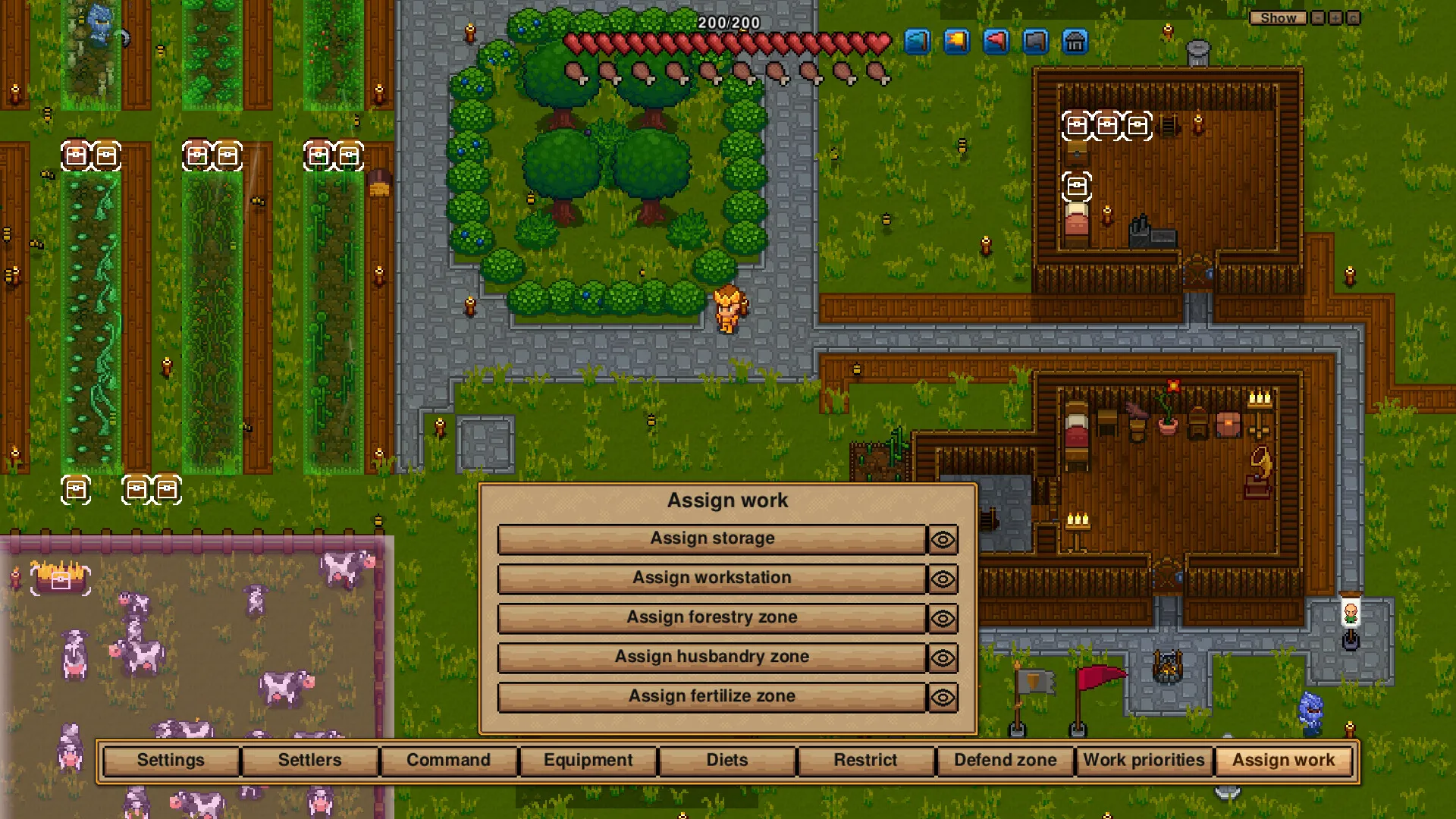
Necesse’s NPC system fundamentally alters progression. Villagers are not decorative—they are production units tied to crafting, farming, and logistics.
Assigning the right NPC to the right station dramatically increases output. Poor assignments waste time and resources.
From player skill to system skill
Progress now depends on understanding how systems interact, not how well the player fights or gathers.
4. Automation Without Full Automation
Necesse stops short of full automation. NPCs work stations, but they still require tools, materials, and space management.
This partial automation keeps players engaged. They must supply inputs, expand infrastructure, and respond to bottlenecks manually.
The system rewards oversight rather than total delegation, reinforcing the settlement-first philosophy.
5. Resource Flow and Settlement Bottlenecks
As settlements grow, resource flow becomes the primary challenge. Crafting chains grow longer, storage fills unevenly, and production stalls.
Players must diagnose why progress slows. Often, the issue is not scarcity, but poor distribution or role imbalance.
Invisible inefficiencies
The settlement may look active, yet critical items are delayed due to subtle system misalignment.
6. Combat as a Settlement Test
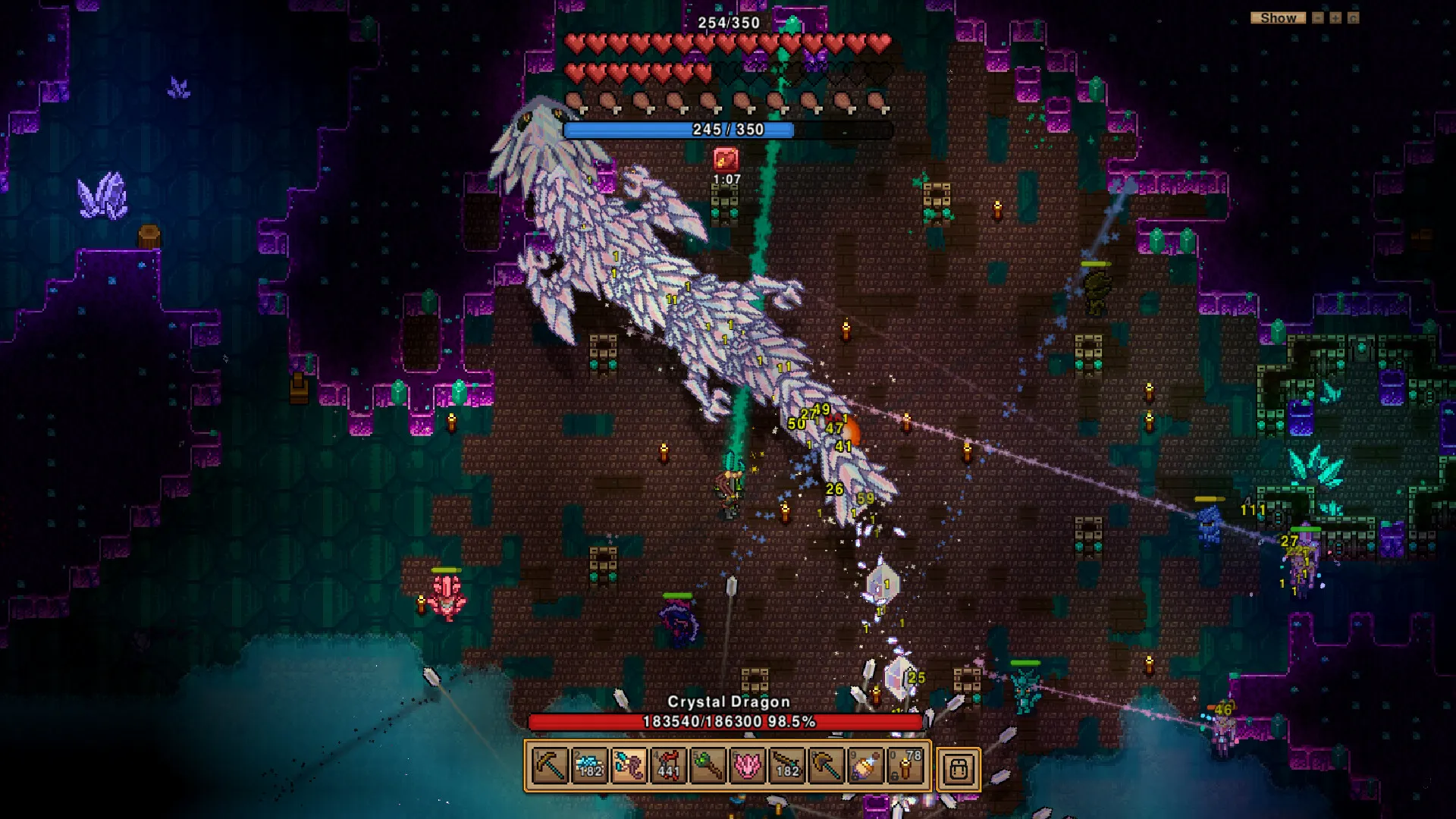
Combat in Necesse remains important, but its role changes. Boss fights and invasions test preparation rather than reflexes.
Weapon upgrades matter, but food supply, NPC support, and settlement readiness matter more. A poorly managed settlement makes combat harder across the board.
Survival through preparation
The strongest players are often those with the most stable settlements, not the best gear.
7. Expansion Pressure and Spatial Planning
As more NPCs arrive, space becomes a strategic resource. Poor settlement layout increases travel time and reduces efficiency.
Players must decide between compact designs and readable layouts. Expanding too fast introduces inefficiencies; expanding too slowly bottlenecks growth.
This turns settlement design into a long-term strategic decision rather than a cosmetic one.
8. Exploration in Service of the Settlement
Exploration in Necesse is not purely about adventure. New islands provide resources, NPCs, and unlocks needed to strengthen the settlement.
Players explore with purpose, seeking materials that solve systemic problems back home.
This reinforces the idea that the settlement is the center of the game world, not the player character.
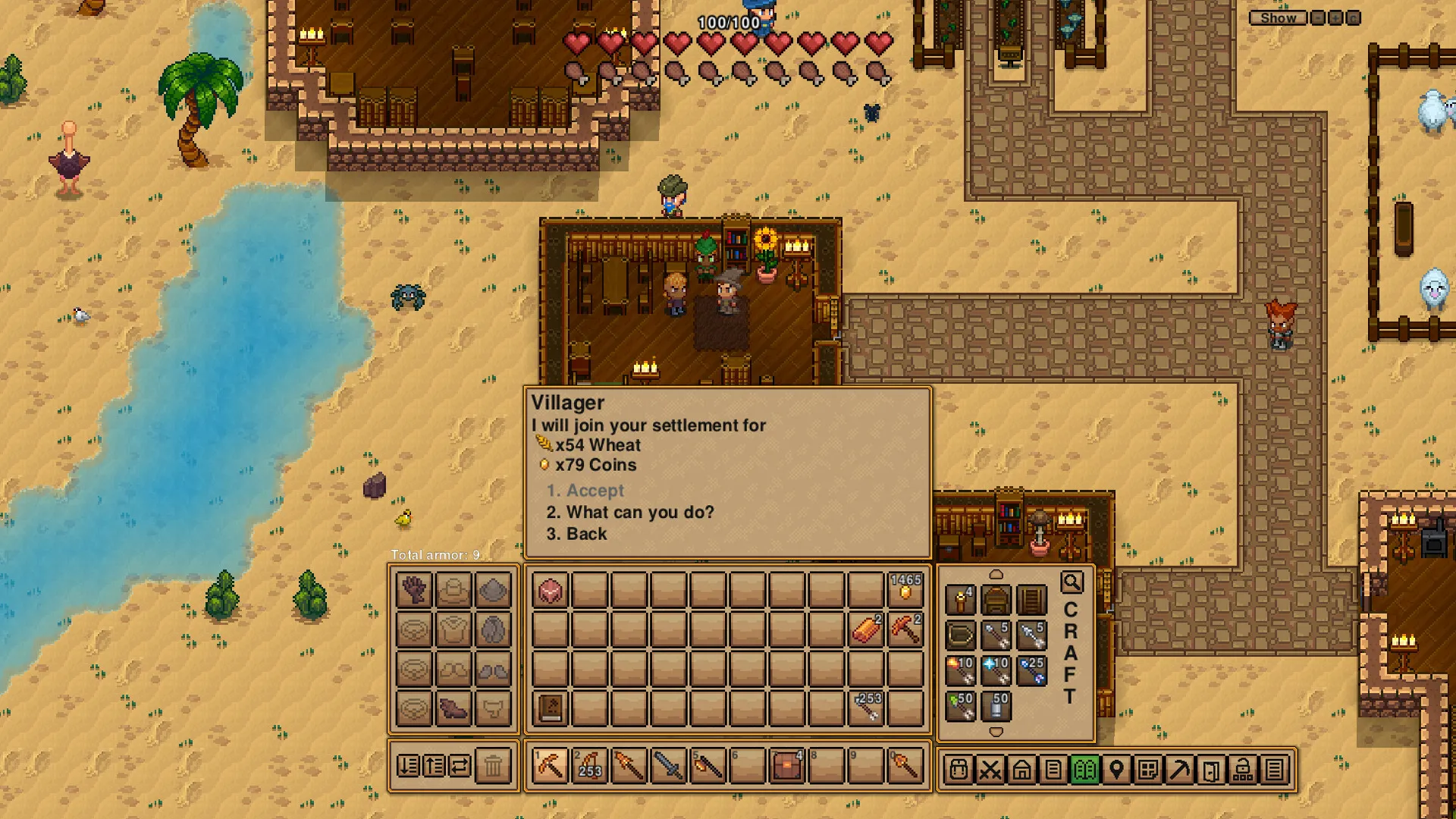
9. Redefining Success in Survival Games
Traditional survival games reward independence and self-sufficiency. Necesse challenges that model by rewarding delegation and coordination.
The player becomes less of a lone survivor and more of a settlement planner. Progress feels slower but more deliberate.
A different survival fantasy
Necesse asks players to survive by building systems that outlast individual effort.
10. Why Settlement-Centered Progression Defines Necesse
Necesse’s settlement-centered progression is not a side system—it is the backbone of the experience. Everything feeds into making the settlement stronger, more efficient, and more resilient.
Personal power plateaus, but systemic power does not. The game encourages players to think long-term and accept gradual progress.
Survival as sustainability
Necesse defines survival not as enduring hardship alone, but as creating a community that thrives without constant intervention.
Conclusion
Necesse transforms the survival genre by shifting progression away from individual dominance and toward settlement management. Through NPC roles, resource flow, spatial planning, and systemic bottlenecks, the game teaches players that long-term survival depends on structure rather than strength. This design choice creates a slower, more thoughtful experience that rewards planning, patience, and oversight. Necesse succeeds by reframing survival as a collective effort, where the true measure of success is not how powerful the player becomes, but how well the settlement sustains itself over time.