 mullergame.com
How to Play Moon Sweepers – Complete Beginner's Gameplay Guide

Moon Sweepers is a first-person cleaning and automation simulation game where players are sent to the Moon with one simple objective: clean up its enormous dusty surface. Starting with nothing more than a basic toothbrush, you must collect lunar dust, deliver it to depots, earn money, and invest in better equipment to expand your cleaning operation.
The game combines resource collection, equipment upgrades, base building, automation, and online multiplayer. You can work independently or team up with as many as 16 players to cover larger areas, build production systems, and unlock cleaning vehicles. The key to making progress is improving every stage of your operation, from collecting dust to delivering shipments and automating repetitive work.
SECTION 1: Learn the Basic Cleaning and Earning Loop
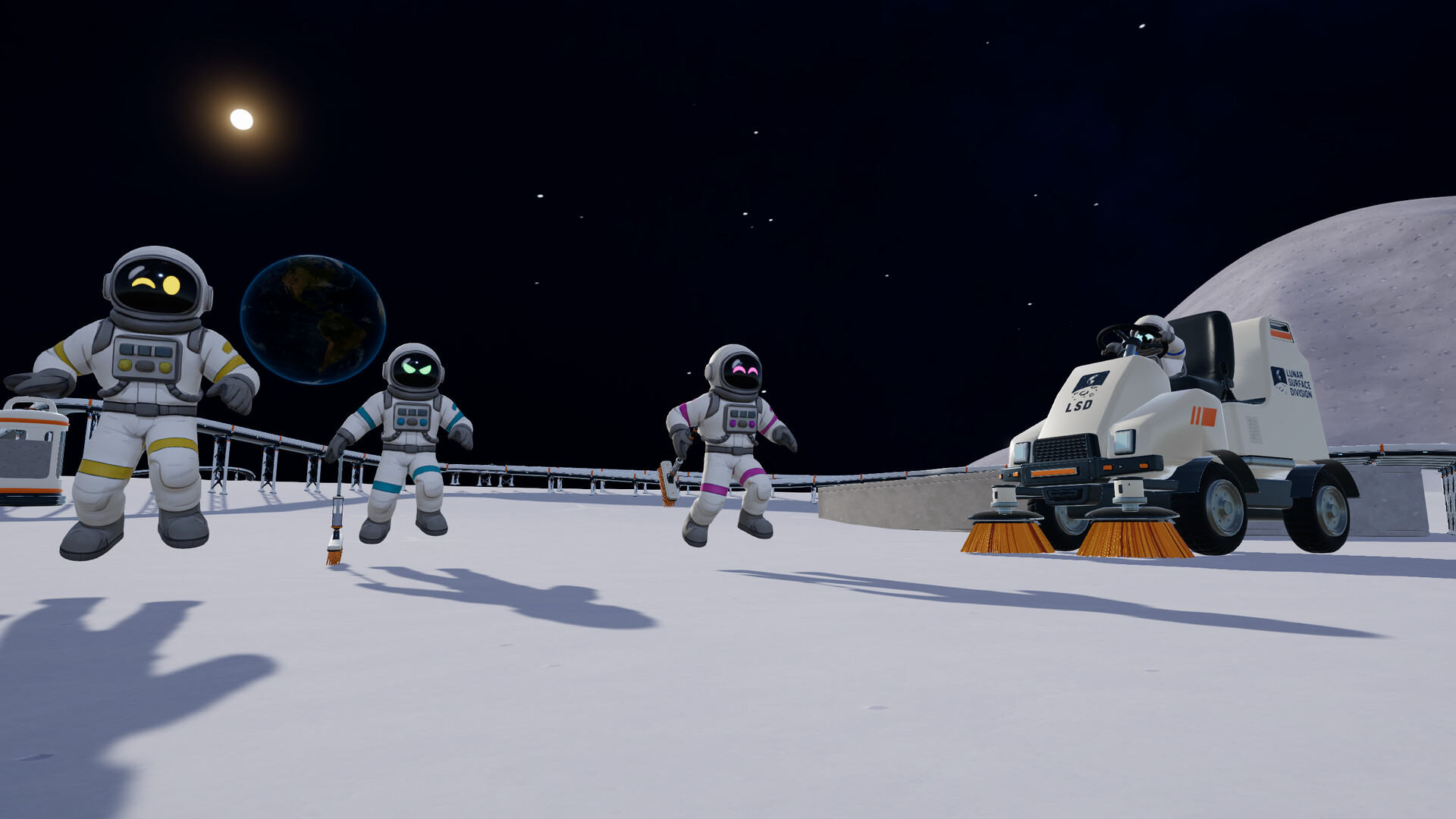
Your first objective in Moon Sweepers is to understand how lunar dust becomes money. Start by using your toothbrush to clean the dusty ground around your initial station. Move your brush across the surface and collect as much dust as your current storage capacity allows.
Once your storage is full or you have collected a useful amount, return to the depot and deposit your materials. Launch a shipment to receive payment, then use your earnings to purchase better equipment. Repeat this process until you can collect and transport more dust with fewer trips.
Follow this simple progression cycle: sweep the ground, collect dust, deliver it to the depot, launch a shipment, and purchase upgrades. Understanding this loop is the foundation of every other activity in the game.
SECTION 2: Collect Lunar Dust More Efficiently
At the beginning, your toothbrush is slow and covers a relatively small area. Instead of wandering randomly across the Moon, focus on cleaning a manageable section near your starting station. This makes it easier to return to the depot and prevents unnecessary travel.
Move systematically across dusty ground instead of repeatedly sweeping the same cleaned area. Watch the surface change as you work and gradually expand into nearby sections once you have improved your equipment.
Pay attention to your storage capacity. When your container approaches its limit, stop collecting and return to the depot. Making several well-planned deliveries is more efficient than continuing to sweep when you cannot carry additional materials.
SECTION 3: Deliver Dust and Manage Your Earnings
Collecting dust is only the first part of making money. You must deliver your collected materials to a depot and launch shipments to receive payment.
After every shipment, check your available balance and compare the cost of your next upgrades. Avoid spending all your earnings on equipment without considering which improvement will actually increase your productivity.
A useful approach is to save toward one meaningful upgrade at a time. If your cleaning tool is slowing down your work, improve it first. If you spend too much time returning to the depot, increasing carrying capacity may provide greater value.
Keep repeating the collection and shipment cycle until you can afford equipment that significantly reduces the time required for each delivery.
SECTION 4: Choose the Right Equipment Upgrades
Better cleaning tools and increased storage capacity are essential for expanding your operation. A stronger tool allows you to clean more effectively, while additional carrying capacity lets you complete longer collection sessions before returning to the depot.
Before purchasing an upgrade, identify the biggest limitation in your current setup. If cleaning is too slow, prioritize a better brush. If your storage fills too quickly, invest in additional capacity.
Do not assume the most expensive available purchase is automatically the best choice. Compare the practical benefit of each upgrade and choose the one that improves your current workflow.
As your operation expands, look for opportunities to unlock cleaning vehicles. These provide another way to increase your cleaning productivity and make larger projects easier to manage.
SECTION 5: Place Depots Near Your Work Areas
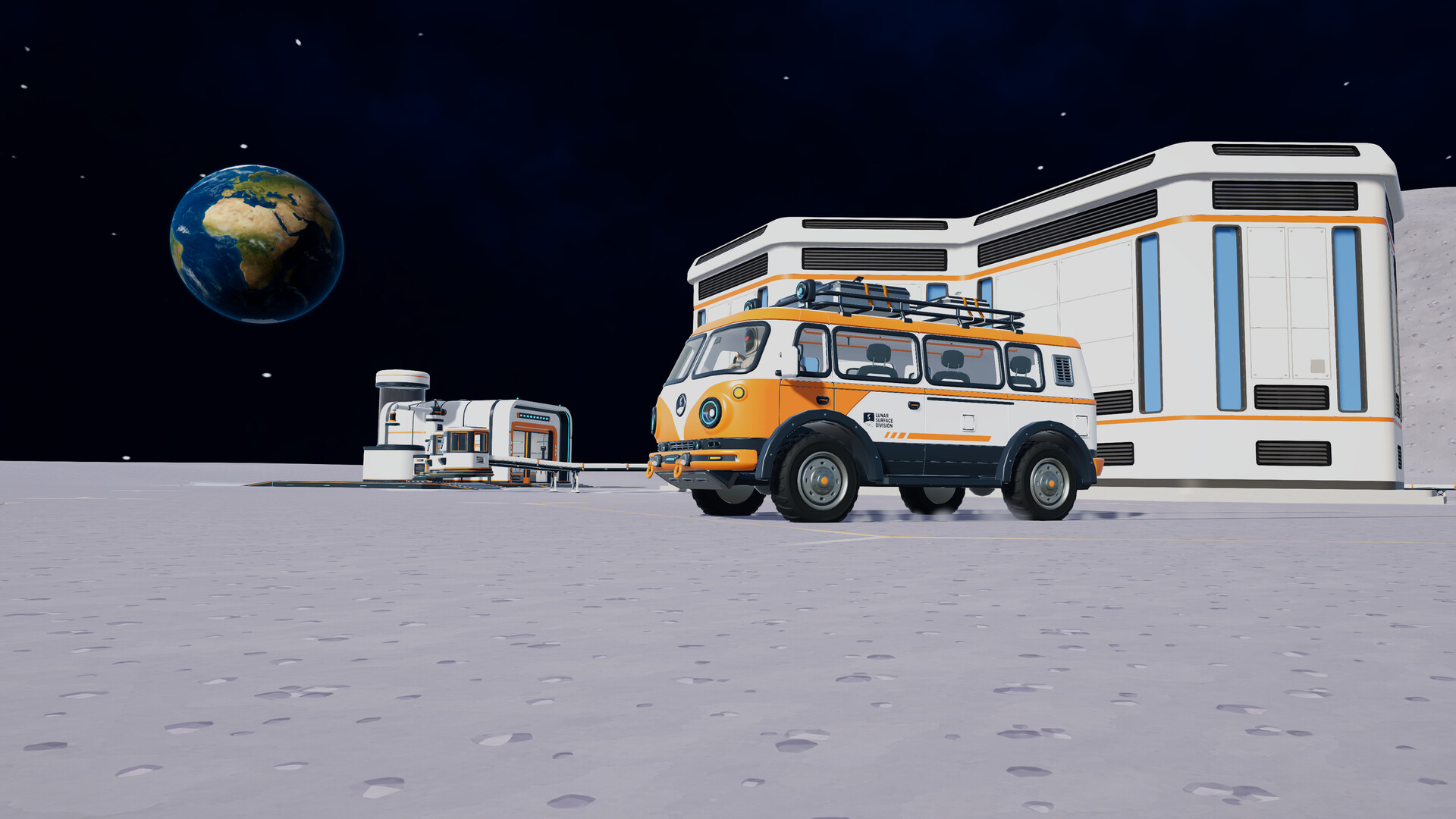
As you move farther away from your starting station, returning to the same depot becomes increasingly inconvenient. This is where additional depots can improve your overall workflow.
When expanding into a distant section of the Moon, consider placing a depot closer to your active cleaning area. This reduces unnecessary travel and makes it easier to deliver collected materials during longer sessions.
Before placing a new depot, think about where you intend to clean next. Choose a location that provides convenient access to nearby dusty terrain rather than placing structures randomly.
Build your operation gradually. Start with a central depot, expand toward useful working areas, and adjust your layout as new equipment and automation systems become available.
SECTION 6: Build Conveyor Systems for Automatic Delivery
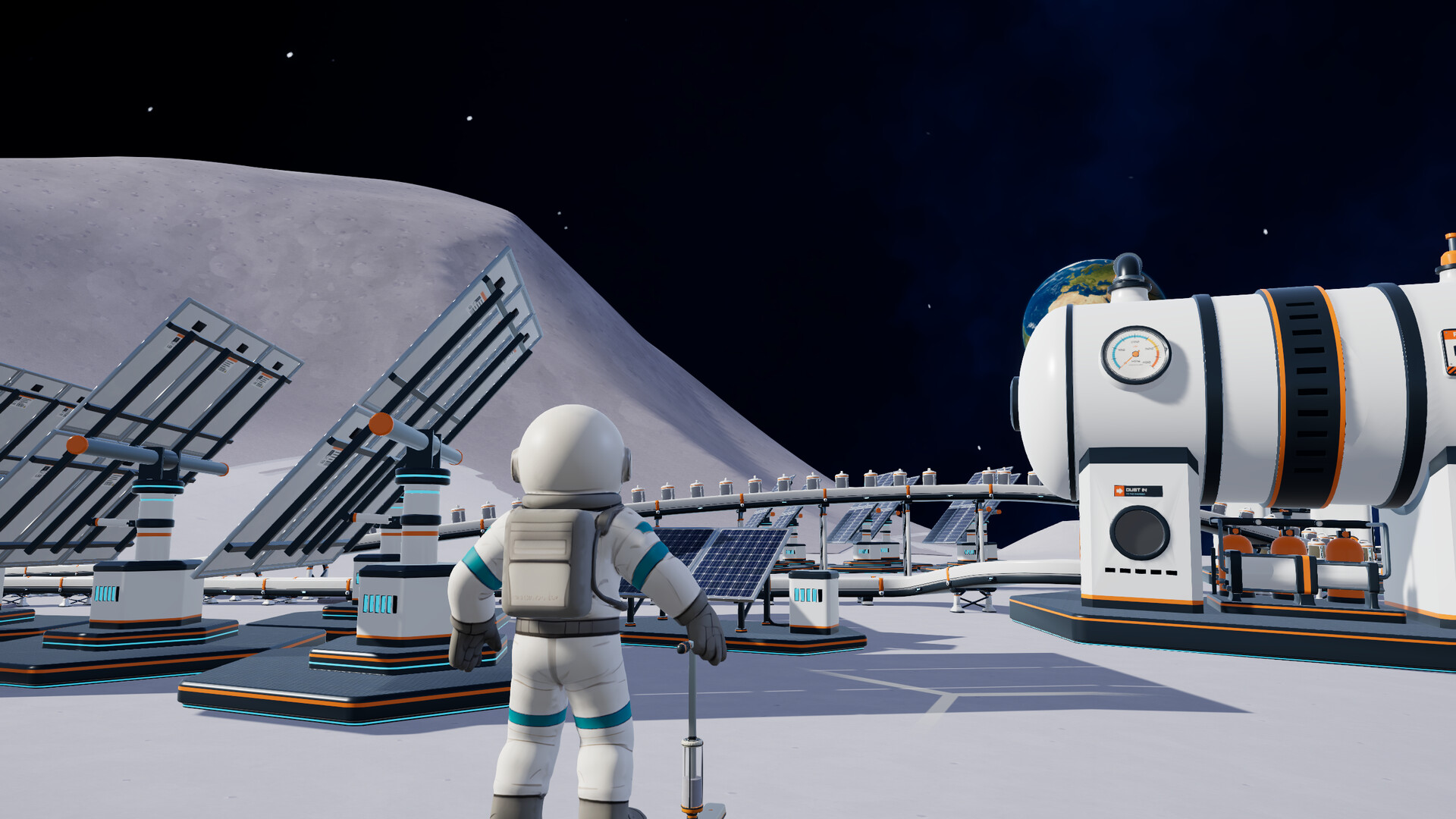
Once you begin expanding your base, learn how to use conveyor belts and connected production components. These systems can move collected materials toward an intake without requiring you to manually transport every load.
Start with a small and simple conveyor setup. Connect the appropriate output to the depot intake, then check whether materials move through the system correctly. Test the connection with a small amount of dust before expanding the entire production line.
As your system becomes more complex, use splitters and mergers to organize material movement. Keep the layout easy to understand so you can identify blocked connections or misplaced components quickly.
The important principle is to automate one part of your workflow at a time. A small functioning system is more useful than a large production line that has not been tested.
SECTION 7: Use J.O.O.N.A.S. to Automate Cleaning
J.O.O.N.A.S. is an automated cleaning robot that can help reduce the amount of manual work required to maintain your operation. Instead of personally cleaning every section, you can use automation to handle repetitive tasks while focusing on expansion.
Start by learning how the robot works and where its collected materials are delivered. The updated system can clean sectors independently and send capsules toward the nearest catcher. Catchers have a limited capacity, so monitor their storage and make sure your collection setup can handle the incoming materials.
Use the map to check the robot's current activity and identify which sectors it is cleaning. This helps you understand whether your automated system is working efficiently or needs adjustments.
Do not abandon manual cleaning completely. Use your own equipment to work in areas that automation has not covered while the robot handles established sectors.
SECTION 8: Coordinate With Friends in Co-op Mode
Moon Sweepers supports online co-op sessions with up to 16 players. Working with friends allows your crew to cover more ground, collect resources faster, and build a larger cleaning operation.
Before starting, divide responsibilities between players. Some can focus on collecting dust, others can manage deliveries, and another player can work on expanding the depot or building automation systems.
Avoid having everyone concentrate on the same small area unless you are deliberately trying to finish a particular section. Spread your crew across different locations to improve overall coverage.
Since shared upgrades were introduced in an early update, coordinate purchases with your teammates and check the current upgrade system before spending money repeatedly. Good communication helps your group avoid duplicated work and unnecessary expenses.
SECTION 9: Use Cleaning Vehicles and Expand Your Operation
As your operation grows, cleaning vehicles become important tools for handling larger areas. They allow you to move around the lunar surface and clean more efficiently than relying exclusively on your starting toothbrush.
Before using a vehicle for a long cleaning session, familiarize yourself with its controls and movement. Practice turning, positioning, and navigating around your structures so you do not waste time correcting avoidable mistakes.
Expand your working area gradually and connect new locations to your existing depot and automation network. Keep your routes practical, and make sure your vehicles can access the areas you intend to clean.
As you unlock more equipment, combine vehicles, conveyors, depots, and automated robots into one organized operation. This transforms your gameplay from manually collecting small amounts of dust into managing a much larger cleaning system.
SECTION 10: Build an Efficient Lunar Cleaning Operation
Once you understand the main mechanics, focus on improving the entire production cycle instead of upgrading individual tools without a plan.
Start by identifying your slowest activity. If manual cleaning takes too long, improve your tools or use vehicles. If transportation is inefficient, build a closer depot or connect conveyor belts. If you spend too much time repeating the same cleaning tasks, expand your automated robot system.
Check your storage capacity, depot connections, robot activity, and available funds regularly. Make sure every new structure has a clear purpose before investing in a large expansion.
A good long-term strategy is to build a small working operation first, test every connection, and then expand it into additional sectors. By combining manual cleaning, vehicles, conveyors, and automation, you can gradually turn a simple toothbrush job into a large lunar cleaning business.
CONCLUSION
Moon Sweepers is built around a straightforward but rewarding progression system. Collect lunar dust, deliver shipments, earn money, improve your equipment, and gradually expand your cleaning operation. As you unlock better tools, vehicles, depots, and automation systems, the process becomes more efficient and opens up new ways to manage the Moon's surface.
The best way to progress is to improve your weakest production stage before investing in unnecessary expansion. Start small, organize your depots, test conveyor connections, use J.O.O.N.A.S. effectively, and coordinate with friends when playing co-op. With a well-planned operation, you can clean larger areas and build a much more productive lunar workforce.