.webp)
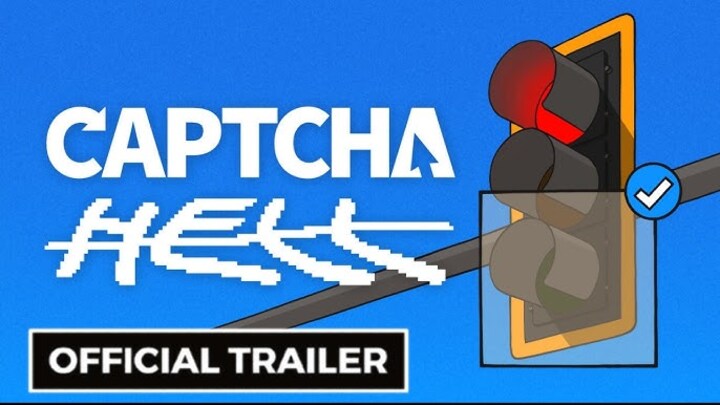
Surviving the Pattern Escalation System in CAPTCHA Hell
Surviving the Pattern Escalation System in CAPTCHA Hell
Every puzzle game has a mechanic that separates casual players from dedicated ones. In CAPTCHA Hell, that mechanic is the pattern escalation system. While the game initially presents familiar CAPTCHA-style challenges, it quickly evolves into a psychological test that pushes observation, reaction speed, and concentration to their limits. Many new players assume success depends on clicking quickly, but experienced players understand that pattern recognition is far more important than raw speed.
As the difficulty increases, CAPTCHA Hell deliberately introduces visual distractions, misleading layouts, and time pressure designed to overwhelm players. Learning how these systems work is the key to surviving later stages without relying entirely on trial and error. This guide focuses on understanding the pattern escalation system and developing strategies that consistently improve performance.
Understanding How Difficulty Increases
The Early Learning Phase
The opening levels introduce simple image selections and text recognition tasks that allow players to understand the game's controls. Mistakes are rarely punished heavily, making this stage ideal for learning how different puzzle types behave.
Most early failures occur because players rush instead of carefully reading the objective. Developing accurate habits from the beginning creates a strong foundation for more difficult stages.
The Transition to Complex Challenges
Once the tutorial phase ends, the game begins combining multiple mechanics into a single puzzle. Instead of identifying one object, players may need to recognize patterns while ignoring misleading images and responding within a strict time limit.
The increase in difficulty is gradual, but each new mechanic adds another layer of mental pressure.
Recognizing Visual Patterns
Training Your Eyes
Experienced players rarely scan every image individually. Instead, they train themselves to recognize groups of similar shapes, colors, and textures almost instantly.
Rather than searching randomly, focus your attention on areas most likely to contain the requested objects. This significantly reduces decision time.
Ignoring Visual Noise
Many later puzzles intentionally include distracting objects that resemble the correct answer.
Common distractions include
- Similar colors
- Nearly identical shapes
- Rotated objects
- Partial images
- Low contrast backgrounds
Learning to ignore these distractions improves both speed and accuracy.
Managing Time Pressure
Avoiding Panic
The countdown timer is one of the biggest psychological challenges in CAPTCHA Hell. Players often make unnecessary mistakes simply because they panic when time becomes limited.
Taking one extra second to confirm an answer is often faster than failing the puzzle and restarting.
Building Consistent Speed
Reaction speed improves naturally through repetition. Instead of trying to click faster immediately, focus on reducing unnecessary mouse movement and maintaining a steady rhythm.
Consistency produces better long-term results than rushing every challenge.
Understanding Trick Puzzles
Recognizing Hidden Rules
Some puzzles appear straightforward but contain subtle conditions that change the correct solution. Reading instructions carefully prevents avoidable mistakes.
Players who rely entirely on previous experience may overlook these changes and repeatedly fail the same challenge.
Learning From Failure
Every incorrect answer provides useful information about how the game generates puzzles.
Instead of becoming frustrated, identify exactly why the answer was incorrect before attempting the puzzle again.
Improving Focus During Long Sessions
Avoiding Mental Fatigue
CAPTCHA Hell becomes increasingly demanding as sessions become longer. Concentration naturally decreases after repeated difficult puzzles.
Taking short breaks helps maintain accuracy and reduces careless mistakes caused by fatigue.
Maintaining Attention
Helpful habits include
- Playing in a quiet environment
- Reducing background distractions
- Keeping sessions reasonably short
- Resting after difficult stages
These habits improve overall consistency.
Adapting to Randomized Challenges
Expecting Variation
No two sessions are exactly the same. The game regularly changes object placement, puzzle order, and visual presentation to prevent memorization.
Players should learn principles rather than individual puzzle solutions.
Developing Flexible Thinking
Adaptability becomes more valuable than memory during advanced gameplay. Remaining calm when encountering unfamiliar layouts allows faster problem-solving.
Common Mistakes Beginners Make
Clicking Too Quickly
Many new players assume the timer is the biggest threat and begin selecting answers before fully understanding the objective.
This usually leads to unnecessary errors.
Ignoring Instructions
Small wording differences can completely change the required answer.
Reading every instruction carefully often prevents repeated failures.
Building Long Term Improvement
Tracking Progress
Experienced players recognize improvements through consistency rather than occasional perfect runs.
Measuring success by reduced mistakes instead of completion speed creates healthier long-term progress.
Practicing Weak Areas
Identify puzzle types that consistently cause problems and spend extra time practicing those mechanics instead of replaying easier sections.
Focused practice produces much faster improvement.
Preparing for the Hardest Levels
Staying Calm Under Pressure
Late-game puzzles are designed to test concentration more than reaction speed.
Remaining patient often leads to better results than attempting to finish as quickly as possible.
Balancing Speed and Accuracy
The best players combine careful observation with efficient decision-making. They rarely hesitate unnecessarily, but they also avoid reckless guessing.
Finding this balance is the key to mastering CAPTCHA Hell.
Conclusion
The pattern escalation system is what makes CAPTCHA Hell uniquely challenging. Rather than relying on quick reactions alone, successful players develop observation skills, maintain focus under pressure, and adapt to constantly changing puzzle designs. By understanding how difficulty evolves, avoiding common mistakes, and practicing consistently, players can overcome even the most demanding challenges while steadily improving their overall performance.
Summary
Master the pattern escalation system in CAPTCHA Hell by improving observation, managing time pressure, avoiding common mistakes, and adapting to increasingly complex puzzles.